Should Startups Use AI to Build Their Website?
AI tools can build a website in an afternoon, but speed and strategy are not the same thing. Here is what vibe coding actually gets you and where it falls short.

5 min read
Copy URL
Copied!
Vibe coding has changed the game for how fast a website can go from idea to live URL. Using tools like Lovable, Claude Code, and v0, founders can now ship entire marketing sites in a weekend, and the visual output is getting genuinely good.

Vibe coding tools
That is not in question. The question is whether speed alone produces a website that actually works for a growing business.
The answer, in most cases, is no. Not because the design is bad, but because a website's job is to communicate, differentiate, and convert. Those are strategy problems, and no amount of iteration speed solves them on its own.
The sameness problem
AI models are trained on thousands of existing websites, so the output naturally gravitates toward the statistical average of what a modern website looks like. The result is a site that looks professional at first glance but is indistinguishable from hundreds of others built the same way.
In one of YC's design review episodes, the team highlighted this exact trend, pointing to the recurring patterns found across AI-generated startup websites. As those patterns become more recognizable, they become less effective at helping companies stand out.
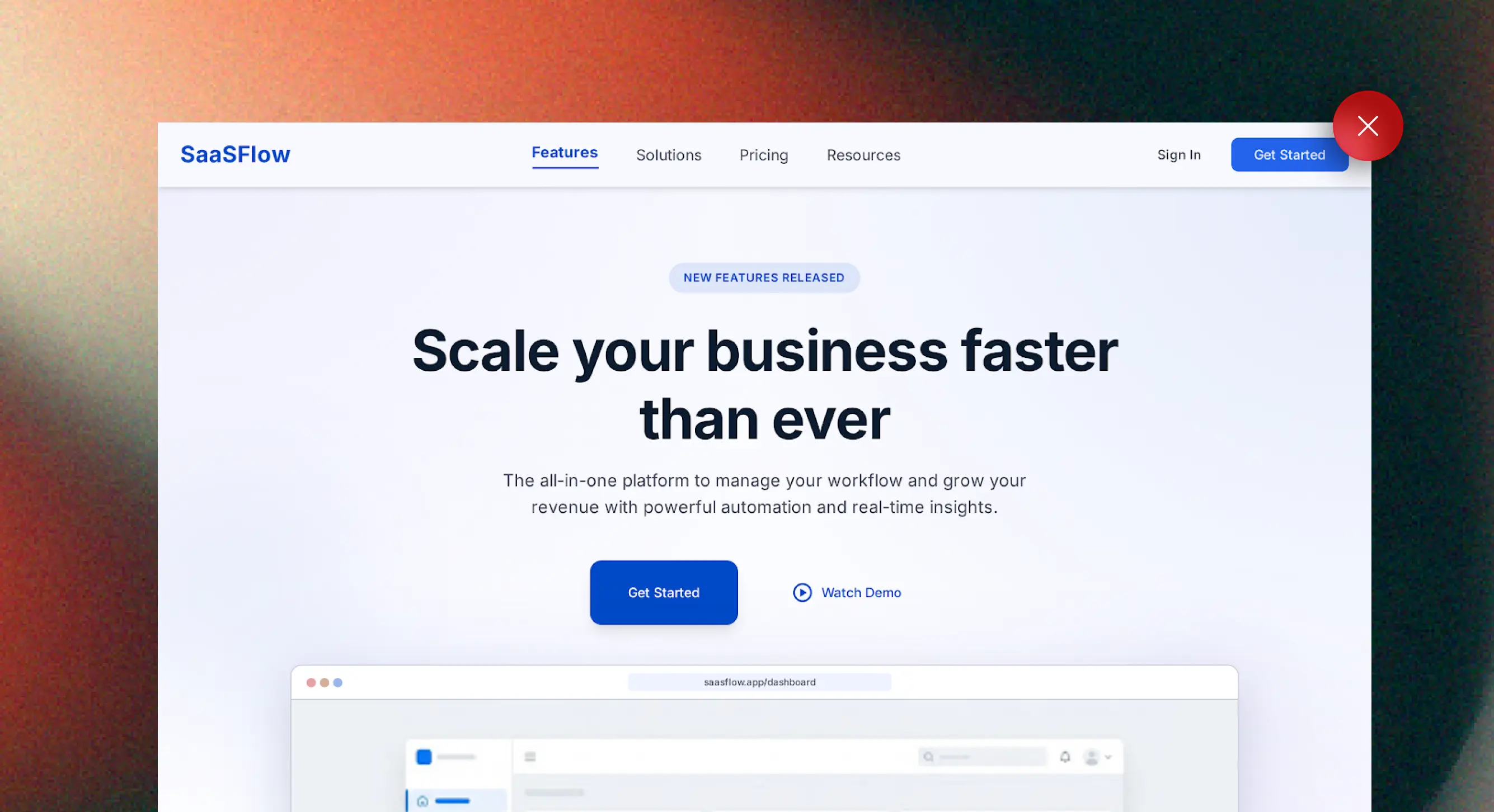
Vibe coded website example
This remains true even at the highest end of the spectrum. Tools like Claude Code with custom skills and carefully engineered prompting workflows can produce remarkably polished interfaces, and the ceiling keeps rising. But they still rely on existing patterns rather than an understanding of your business, market, and positioning.
What makes a website work
A marketing website is not a collection of well-designed sections. It is a strategic asset that communicates your positioning, builds trust, and guides visitors toward a specific action.
That means deciding what the site says before deciding what it looks like. Who is the audience? What do they care about? What objections do they have? What makes your product different from the alternatives? How do you sequence that information so visitors arrive at the right conclusion naturally?
AI can't answer those questions without strategic context. They require an understanding of the business, the market, and the customer.
The hidden cost of "good enough"
A vibe-coded website is often good enough to launch, the danger is assuming it's good enough to grow with.
As the company evolves, the website becomes one of the main ways investors, customers, partners, and candidates evaluate the business. If the messaging is generic, the positioning is unclear, or the experience doesn't reflect the quality of the product, those gaps compound over time.
The cost is rarely rebuilding the website itself. It's the opportunities lost while the website quietly underperforms.
Where AI creates leverage
This is not an argument against using AI in web design. We take an AI-native approach to every project at Boldway and it has made us meaningfully faster and better.
AI is excellent for rapid exploration. When we start a new project we can now generate dozens of layout directions, messaging variations, and visual concepts in a fraction of the time it used to take.
Figma agents (Source: Figma)
AI is also an incredible tool for copy refinement. A rough value proposition can now be iterated across dozens of variations, refining tone, clarity, and brand voice in a matter of hours.
AI helps with technical implementation too. Code generation for custom components, animation logic, schema markup, and responsive behavior are all areas where AI accelerates the build, as long as a human with context is directing the work.
Even the platforms themselves are evolving in this direction. Framer recently introduced agentic AI directly into its editor, accelerating everything from design exploration to site-wide updates and content iteration.
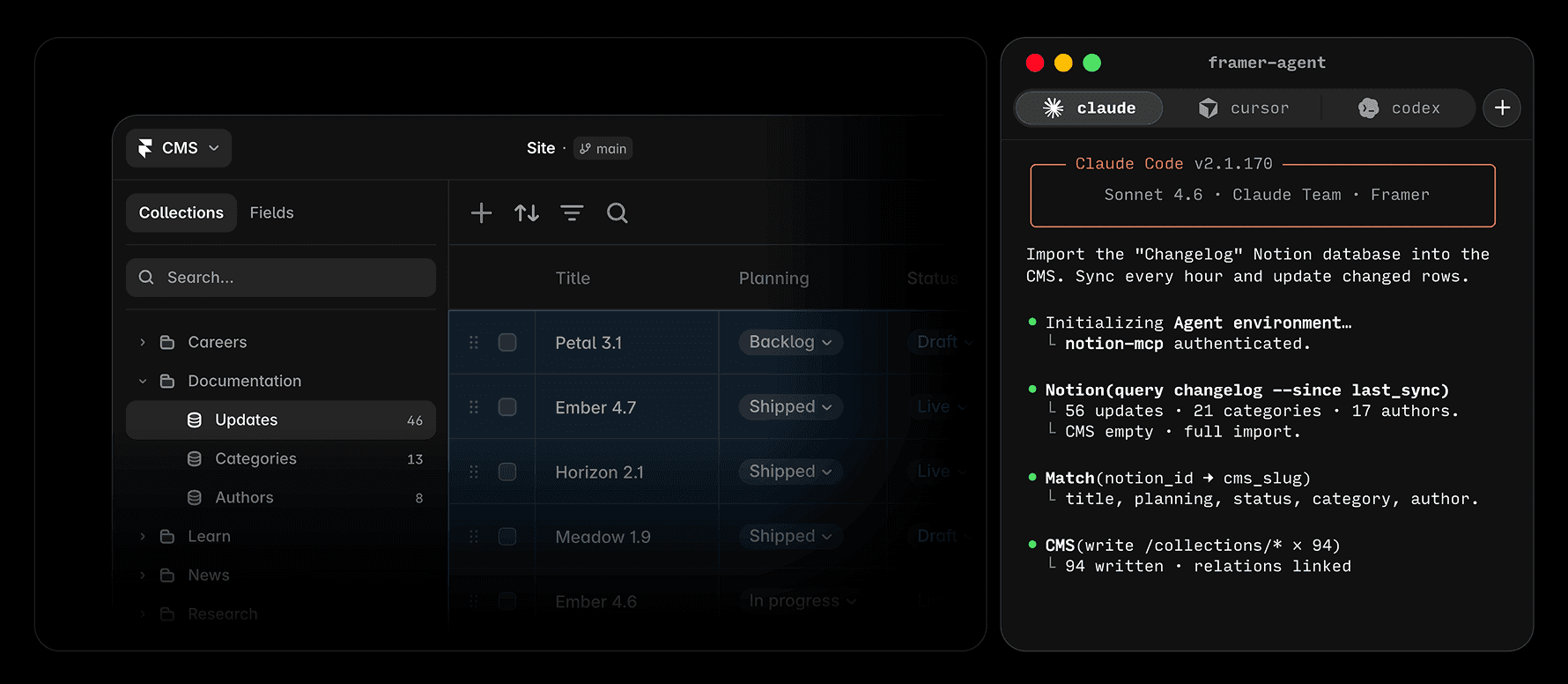
Claude Code and Framer (Source: Framer)
The difference is between using AI as a tool within a strategic process versus using AI as a replacement for the process entirely.
When AI Is Enough
For a pre-seed startup testing an idea, a vibe-coded site might genuinely be the right call. If you need to validate a concept, launch quickly, or put something in front of investors, speed often matters more than polish. Many YC-backed startups ship AI-generated websites at this stage, and that makes complete sense.
The calculus changes as the company grows. Once you're raising a Series A, selling to enterprise customers, or trying to establish a memorable brand, your website stops being a placeholder and becomes a business asset. At that point, the gap between "looks fine" and "actually converts" starts costing real money.
AI is changing how websites are built, not why they're built. The companies that pull ahead will be the ones that pair faster execution with better strategy.
Frequently asked questions
Are vibe-coded websites bad?
Not inherently. They are excellent for prototyping, MVPs, and early-stage validation where speed matters more than differentiation. The limitations appear when the same website is expected to support fundraising, sales, hiring, or long-term growth.
Can AI build a good website?
Yes. AI can build a visually strong website in a fraction of the time it used to take. What it cannot do on its own is define positioning, understand your audience, or make the strategic decisions that determine whether a website actually works.
When is a vibe-coded website no longer ideal?
When the website becomes an important business asset rather than a temporary launch tool. If it's influencing investors, customers, partners, or hiring, it needs to communicate clearly, differentiate the company, and support business goals.
Do design studios use AI?
The best ones do. AI is valuable for exploration, copy iteration, prototyping, and technical implementation. It speeds up execution, but the strategic decisions still come from humans.
Is vibe coding a threat to design agencies?
It is a threat to agencies that compete on execution alone. For studios that solve strategic problems through design, AI is another tool that improves speed and expands what's possible.
Vibe coding has changed the game for how fast a website can go from idea to live URL. Using tools like Lovable, Claude Code, and v0, founders can now ship entire marketing sites in a weekend, and the visual output is getting genuinely good.
Vibe coding tools
That is not in question. The question is whether speed alone produces a website that actually works for a growing business.
The answer, in most cases, is no. Not because the design is bad, but because a website's job is to communicate, differentiate, and convert. Those are strategy problems, and no amount of iteration speed solves them on its own.
The sameness problem
AI models are trained on thousands of existing websites, so the output naturally gravitates toward the statistical average of what a modern website looks like. The result is a site that looks professional at first glance but is indistinguishable from hundreds of others built the same way.
In one of YC's design review episodes, the team highlighted this exact trend, pointing to the recurring patterns found across AI-generated startup websites. As those patterns become more recognizable, they become less effective at helping companies stand out.
Vibe coded website example
This remains true even at the highest end of the spectrum. Tools like Claude Code with custom skills and carefully engineered prompting workflows can produce remarkably polished interfaces, and the ceiling keeps rising. But they still rely on existing patterns rather than an understanding of your business, market, and positioning.
What makes a website work
A marketing website is not a collection of well-designed sections. It is a strategic asset that communicates your positioning, builds trust, and guides visitors toward a specific action.
That means deciding what the site says before deciding what it looks like. Who is the audience? What do they care about? What objections do they have? What makes your product different from the alternatives? How do you sequence that information so visitors arrive at the right conclusion naturally?
AI can't answer those questions without strategic context. They require an understanding of the business, the market, and the customer.
The hidden cost of "good enough"
A vibe-coded website is often good enough to launch, the danger is assuming it's good enough to grow with.
As the company evolves, the website becomes one of the main ways investors, customers, partners, and candidates evaluate the business. If the messaging is generic, the positioning is unclear, or the experience doesn't reflect the quality of the product, those gaps compound over time.
The cost is rarely rebuilding the website itself. It's the opportunities lost while the website quietly underperforms.
Where AI creates leverage
This is not an argument against using AI in web design. We take an AI-native approach to every project at Boldway and it has made us meaningfully faster and better.
AI is excellent for rapid exploration. When we start a new project we can now generate dozens of layout directions, messaging variations, and visual concepts in a fraction of the time it used to take.
Figma agents (Source: Figma)
AI is also an incredible tool for copy refinement. A rough value proposition can now be iterated across dozens of variations, refining tone, clarity, and brand voice in a matter of hours.
AI helps with technical implementation too. Code generation for custom components, animation logic, schema markup, and responsive behavior are all areas where AI accelerates the build, as long as a human with context is directing the work.
Even the platforms themselves are evolving in this direction. Framer recently introduced agentic AI directly into its editor, accelerating everything from design exploration to site-wide updates and content iteration.
Claude Code and Framer (Source: Framer)
The difference is between using AI as a tool within a strategic process versus using AI as a replacement for the process entirely.
When AI Is Enough
For a pre-seed startup testing an idea, a vibe-coded site might genuinely be the right call. If you need to validate a concept, launch quickly, or put something in front of investors, speed often matters more than polish. Many YC-backed startups ship AI-generated websites at this stage, and that makes complete sense.
The calculus changes as the company grows. Once you're raising a Series A, selling to enterprise customers, or trying to establish a memorable brand, your website stops being a placeholder and becomes a business asset. At that point, the gap between "looks fine" and "actually converts" starts costing real money.
AI is changing how websites are built, not why they're built. The companies that pull ahead will be the ones that pair faster execution with better strategy.
Frequently asked questions
Are vibe-coded websites bad?
Not inherently. They are excellent for prototyping, MVPs, and early-stage validation where speed matters more than differentiation. The limitations appear when the same website is expected to support fundraising, sales, hiring, or long-term growth.
Can AI build a good website?
Yes. AI can build a visually strong website in a fraction of the time it used to take. What it cannot do on its own is define positioning, understand your audience, or make the strategic decisions that determine whether a website actually works.
When is a vibe-coded website no longer ideal?
When the website becomes an important business asset rather than a temporary launch tool. If it's influencing investors, customers, partners, or hiring, it needs to communicate clearly, differentiate the company, and support business goals.
Do design studios use AI?
The best ones do. AI is valuable for exploration, copy iteration, prototyping, and technical implementation. It speeds up execution, but the strategic decisions still come from humans.
Is vibe coding a threat to design agencies?
It is a threat to agencies that compete on execution alone. For studios that solve strategic problems through design, AI is another tool that improves speed and expands what's possible.
We pair strategy with AI-powered execution to help startups achieve their most ambitious business goals.

